
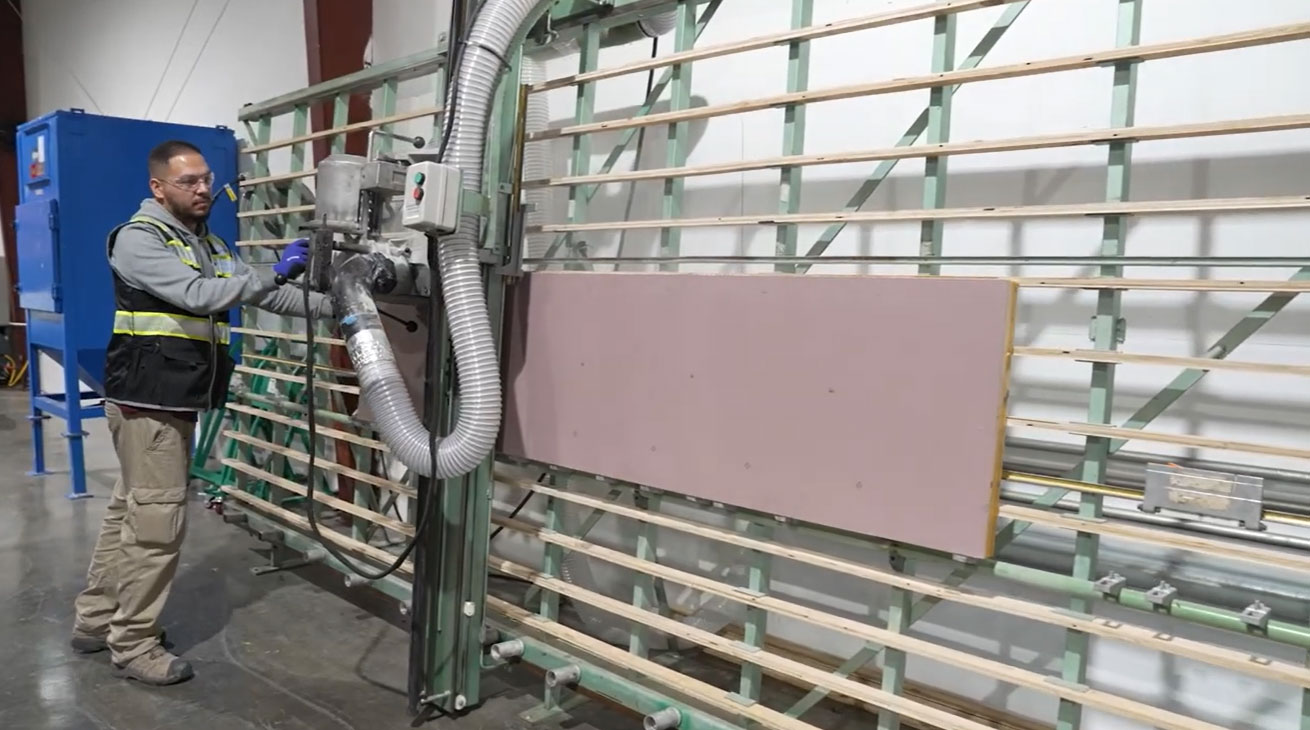
Factory-Built · Hayward to Sacramento
Sacramento is building housing faster than it can build it conventionally.
The Sacramento region and greater Central Valley are among the fastest-growing housing markets in California, driven by steady demand for ADUs, multifamily infill, and suburban growth corridors like Elk Grove, Roseville, and Folsom. State policy has pushed cities toward approving more of that production, which means more projects competing for the same pool of skilled labor and subcontractors at once.
Panelized construction is built for exactly that kind of pressure. Factory-built components arrive pre-labeled and pre-engineered, cutting onsite construction time by up to 30% compared to conventional stick-framing, without requiring heavy equipment to assemble or changes to your architectural, financing, or permitting plans.
4C SAFE™ remains available for the WUI-designated foothill communities east toward the Sierra, steel-framed, fire-resistant, and rated 1-HR and 2-HR fire-resistive, WUI compliant, and ICC-ES listed under ESL-1695 (patent pending).
A region building housing faster than it can build it conventionally.
Sacramento and the surrounding Central Valley are among the fastest-growing housing markets in California, with steady demand for infill development, multifamily housing, and accessory dwelling units. California's broader policy direction has continued to push cities and counties toward approving more ADU and multifamily production, which means more projects competing for the same pool of skilled labor and subcontractors.
Panelized construction is built for exactly that kind of pressure: factory-built components arrive pre-labeled and pre-engineered, cutting onsite construction time by up to 30% compared to conventional stick-framing, without requiring heavy equipment to assemble or changes to your architectural, financing, or permitting plans. Our systems overview breaks down how 4C SAFE™ and 4C ECO™ each fit into that process.
Built for Type V multifamily and infill, at scale.
4C ECO™
Wood-framed, Type V panels optimized for multifamily and infill housing at growth-market scale.
- Frame materialWood
- Best forMultifamily, ADUs, infill
- Performance focusThermal efficiency
- ListingICC-ES ESR-3373
4C SAFE™
Steel-framed, fire-resistant panels for wildland-urban-interface sites in the foothill communities.
- Frame materialSteel
- Fire rating1-HR & 2-HR, fire-resistant
- Best forFoothill & WUI sites
- ListingICC-ES ESL-1695 · Patent Pending
Much of Sacramento's near-term growth is Type V infill and multifamily, the construction type 4C ECO™ is optimized for. For foothill communities further out from the urban core, where wildfire exposure is a known factor, 4C SAFE™ remains available and worth discussing with our team. Building this efficiently also supports the embodied-carbon goals covered on our sustainability page.
Sacramento construction: why the region is turning to factory-built panels.
A closer look at the housing pressure the Capital Region is under, and where a manufactured, panelized approach changes the math for developers, builders, and architects working here.
Sacramento is one of California's most active construction markets, and one of its most constrained. The region set its highest housing-production numbers in nearly two decades in 2024, with the Sacramento Area Council of Governments (SACOG) reporting roughly 12,500 homes built across the six-county region, up about 60% from five years earlier. Within the city, 2025 production climbed again, to 2,737 units, a 14.7% year-over-year increase. Momentum is real, but it is still short of what the region needs.
The housing math the region is trying to solve
Under the state's Regional Housing Needs Allocation (RHNA), the City of Sacramento is expected to plan for roughly 45,580 new homes by 2029, a pace of about 5,700 units a year. Even after 2025's gains, actual production is running near half of that annual target. The gap isn't a lack of demand or approvals, it's throughput: the market is approving more infill, multifamily, and accessory dwelling units (ADUs) than the conventional, stick-built delivery model can pour, frame, and finish on schedule. That is the exact pressure point where a construction manufacturing approach earns its place.
Where the strain shows up: labor and cost
Two forces make conventional stick-framing harder to scale in the Sacramento region right now. The first is labor. The skilled-trades workforce is aging, roughly 40% of construction workers nationally are over 45, and training pipelines haven't kept pace, which is why organizations have opened trade academies in Sacramento specifically to address the shortage. When every active project competes for the same framers, insulators, and sheathing crews, schedules slip and costs climb. The second is cost itself: new tract construction in the Sacramento Valley now runs roughly $275 to $375 per square foot, driven by material inflation and that same labor scarcity. With rents softening after several years of heavy delivery, budget certainty matters more than ever.
Panelized construction attacks both problems directly. Because 4C manufactures wall, floor, and roof components to exact specification at our Hayward, California facility, the bulk of the labor moves off the jobsite and into a controlled plant, where a smaller, consistent crew builds the same components the same way every time. Components arrive pre-labeled and sequenced, so onsite work is assembly rather than fabrication, cutting field construction time by up to 30% and reducing how exposed a project is to local labor availability and weather. Fewer field variables also means fewer of the change orders and reworks that quietly inflate a Sacramento budget.
Infill, ADUs, and multifamily: the 4C ECO™ fit
Most of Sacramento's near-term growth is Type V wood-framed construction, ADUs in established neighborhoods, backyard cottages and garage conversions, and multifamily infill along the region's growth corridors in Elk Grove, Roseville, Folsom, and the urban core. This is precisely the work 4C ECO™ is optimized for: wood-framed, Type V panels (ICC-ES ESR-3373) engineered for thermal efficiency and repeatable, faster-to-build housing. Because panels install without heavy equipment or a staging yard, they are well suited to the tight lots and narrow setbacks that define infill and ADU construction, where a crane or large laydown area often isn't an option. And because 4C integrates with conventional design, financing, and permitting, developers don't have to redesign approved plans to capture the schedule advantage, a point we cover in more depth for owners and developers and builders and general contractors.
Foothills and wildfire exposure: the 4C SAFE™ fit
Sacramento's growth doesn't stop at the valley floor. As development pushes east toward the Sierra foothills, more projects fall inside Wildland-Urban Interface (WUI) zones where fire-resistive construction is a code and insurability question, not just a design preference. For those sites, 4C SAFE™ offers a steel-framed, fire-resistant panel system rated 1-HR and 2-HR fire-resistive and WUI compliant (ICC-ES listed under ESL-1695, patent pending). It lets builders in foothill communities meet a higher resilience standard without trading away the speed and predictability of the panelized process, the same reason the system is used for fire rebuilds elsewhere in our project portfolio.
Building efficiently, and lower-carbon, by default
Manufacturing components to spec also cuts material waste, offcuts, and site disruption compared with field framing, which supports the embodied-carbon and energy-code goals California increasingly holds construction to. For teams weighing how a manufactured approach affects a project's footprint alongside its schedule and cost, our sustainability page breaks down where those savings come from.
How 4C works with the Sacramento construction industry
4C sells through the industry, not around it. We work exclusively through partners, architects, general contractors, developers, and material vendors, rather than direct to homeowners, so a manufactured panel system slots into the project teams already delivering Sacramento's housing. For an architect, that means design intent is preserved because the system adapts existing plans into manufacturable components. For a GC or developer, it means procuring one certified, pre-sequenced component package instead of coordinating framing, insulation, sheathing, and weather barriers across separate trades and schedules. As the region works to close its housing gap with a labor pool that can't easily grow overnight, moving more of the build into the factory is one of the few levers that adds real capacity, and it's the lever 4C is built to pull.
Actively expanding into the region: here's what that means.
We don't have a completed Sacramento-area project to show yet, and we'd rather tell you that plainly than overstate our footprint. What we do have is a manufacturing process built to serve exactly this kind of growth market, a team ready to work with local architects, developers, and builders from day one, and a growing project portfolio in other California markets that shows the same process at work.
-
Initial project review
Share your plans and site details. Our team reviews them for panelization potential, with no architectural redesign needed.
-
System recommendation
We recommend 4C ECO™ or 4C SAFE™ based on construction type, site conditions, and budget targets, working through your architect, GC, or developer since we sell exclusively through partners.
-
Engineering & fabrication in Hayward
Panels are engineered and manufactured at our Bay Area facility, pre-labeled and sequenced for your build order.
-
Delivery to the Sacramento region
Panels ship from Hayward to your Central Valley jobsite as part of our standard Northern California delivery process.
-
Assembly support
Panels arrive ready to assemble with no heavy equipment required, and our team is available to support your crew through installation.
Building in the Sacramento region?
Talk to our team about bringing 4C SAFE™ or 4C ECO™ to your next Central Valley project.