Example Build · Borrego Springs, CA
Two San Diego County projects show the 4C process in action.
Borrego Springs and Escondido demonstrate how coordinated factory-built systems can serve distinct sites, climates, and performance priorities.
That’s the same precision every 4C SAFE™ and 4C ECO™ panel carries countywide, from coastal Escondido to the desert interior, manufactured to hold its tolerances long before it reaches triple-digit heat or marine air on site.
4C SAFE™ is steel-framed, fire-resistant, and rated 1-HR and 2-HR fire-resistive, WUI compliant, and ICC-ES listed under ESL-1695 (patent pending), the system behind Borrego Springs and every fire rebuild we deliver.
One county, two very different climates.
San Diego County isn't one construction market. It's several. Coastal and inland-suburban communities like Escondido call for efficient, well-insulated homes that balance upfront cost with long-term energy performance. Further east, the desert interior around Borrego Springs presents extreme temperature swings and a remote logistics environment where a system that arrives pre-engineered and requires no heavy equipment to assemble is a genuine advantage. Our systems overview compares both options side by side if you're weighing which one fits your site.
We've already built in both settings. Our Borrego Springs project was a single-family fire rebuild and the very first 4C SAFE™ installation anywhere, and our Escondido project delivered a single-family home with an office and carport on the same 4C SAFE™ system, proof that it holds up across the county's full range of conditions. That kind of factory discipline is central to our mission as a manufacturer, not just a materials supplier.
4C SAFE™ for remote and high-risk sites
Steel-framed, fire-resistant, and 1-HR and 2-HR fire-rated (ICC-ES ESL-1695, patent pending), proven in the desert interior with our first-ever installation in Borrego Springs.
4C ECO™ for coastal and suburban builds
Wood-framed Type V construction (ICC-ES ESR-3373) with the county's best thermal efficiency and budget control.
No heavy equipment required
Panels assemble without heavy machinery, a meaningful advantage on the more remote sites found across San Diego County's inland and desert areas.
Two completed projects, two different systems.
From the desert to the suburbs, here's what we've already delivered in San Diego County.

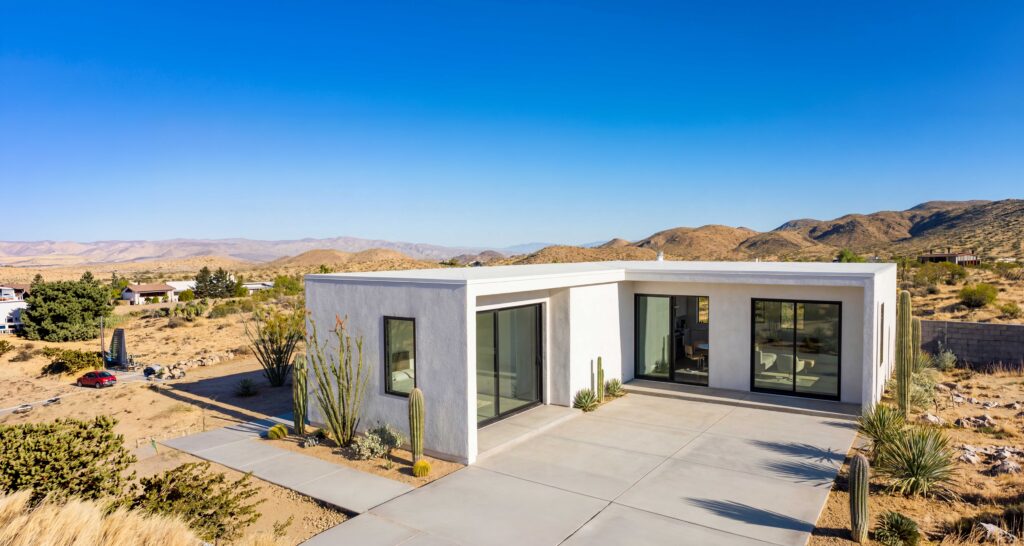
Borrego Springs Residence
Borrego Springs, CA
Our first-ever 4C SAFE™ installation, proving the system's speed and precision in a remote desert-climate setting.
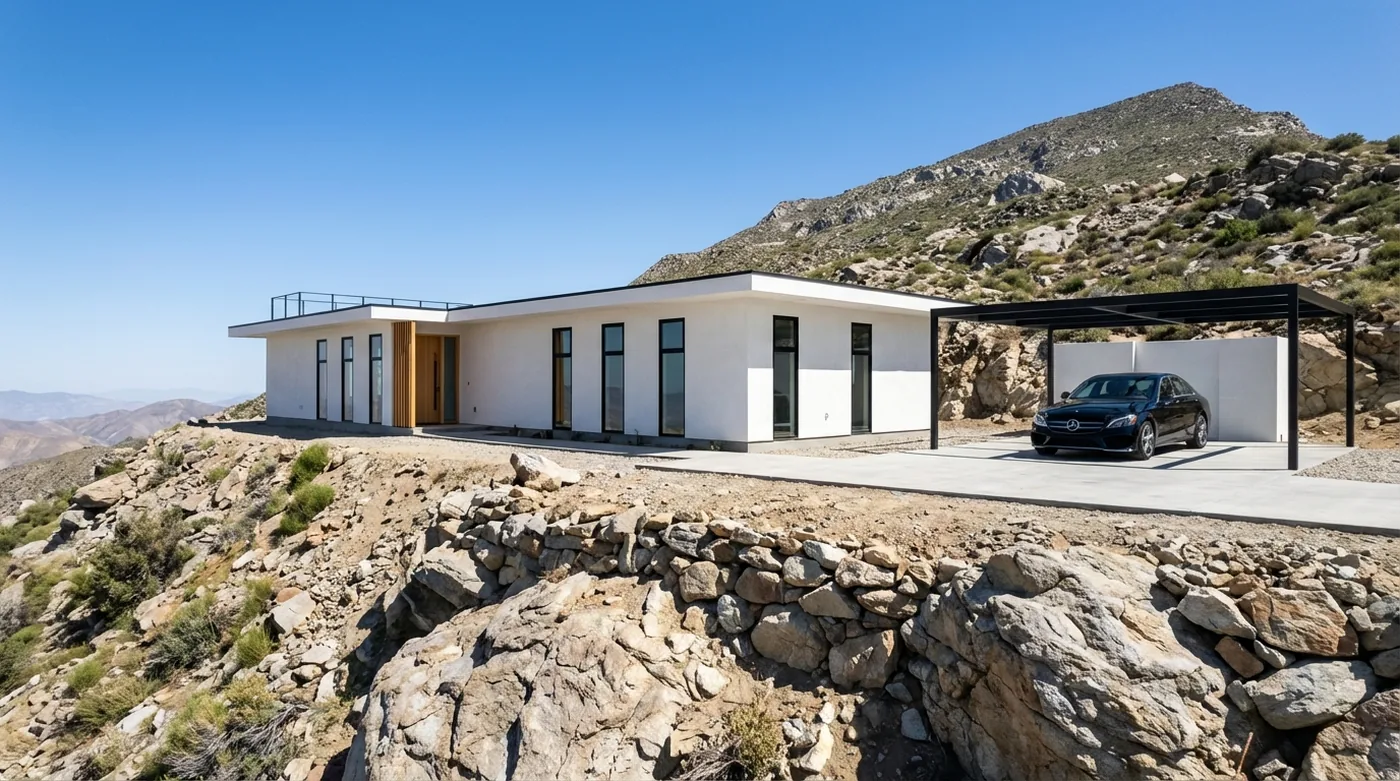
Escondido Residence
Escondido, CA
A single-family fire rebuild and the first complete field installation of the 4C SAFE™ system.
Both homes were specified by local design and building professionals. We work exclusively through partners like these rather than selling direct to homeowners.
San Diego construction: precision built for a county of many climates.
A closer look at the housing pressure, cost, and climate range across San Diego County, and why factory-built panels are a fit from the coast to the desert backcountry.
San Diego County needs far more housing than it is building, across a wider range of conditions than almost any county in California. Under the current Regional Housing Needs Allocation (RHNA), the county's nineteen jurisdictions must plan for roughly 171,685 new homes in the 2021–2029 cycle, and the state estimates the region needs on the order of 28,000 new homes a year to keep pace with demand. Production is climbing but still short: the City of San Diego approved close to 14,500 housing permits in the year ending early 2026, nearly double the year before, yet only about half of what the region needs annually. With a countywide median home price near $925,000 and only around one in nine local households able to afford it, the pressure to build more, and build efficiently, is acute.
High costs and a tight labor pool
Building in San Diego is expensive and getting harder to staff. New construction here is commonly estimated from the high-$200s to well over $800 per square foot depending on finish level and site work, and every project draws from a strained trades workforce: roughly two-thirds of California contractors name skilled-labor shortages as their top challenge, and San Diego's construction labor vacancy rate has run around 12%, well above a healthy market. Panelized construction is a direct response to both. Because 4C manufactures components to exact specification at our Hayward facility and delivers them pre-labeled and sequenced, the jobsite becomes an assembly operation, cutting onsite construction time by up to 30% and reducing how many trades a builder must sequence on a constrained schedule.
An ADU market that just got more selective
San Diego has been one of California's most active ADU markets, permitting roughly 5,720 accessory units between 2021 and 2024, including hundreds under the City's density-boosting Bonus ADU Program. In 2025 the City Council rolled that program back, effective that August, adding a citywide two-story height cap, a parking requirement outside transit areas, and new fire-safety limits, including making lots in High and Very High Fire Hazard Severity Zones on single-access roads ineligible and requiring larger setbacks in fire zones. In a tighter regulatory environment, a system that delivers ADUs efficiently and predictably matters more, not less. 4C ECO™, our wood-framed Type V system (ICC-ES ESR-3373), is well matched to ADUs and small infill, and because panels assemble without heavy equipment, they suit the compact lots those units go on.
One county, six climate zones
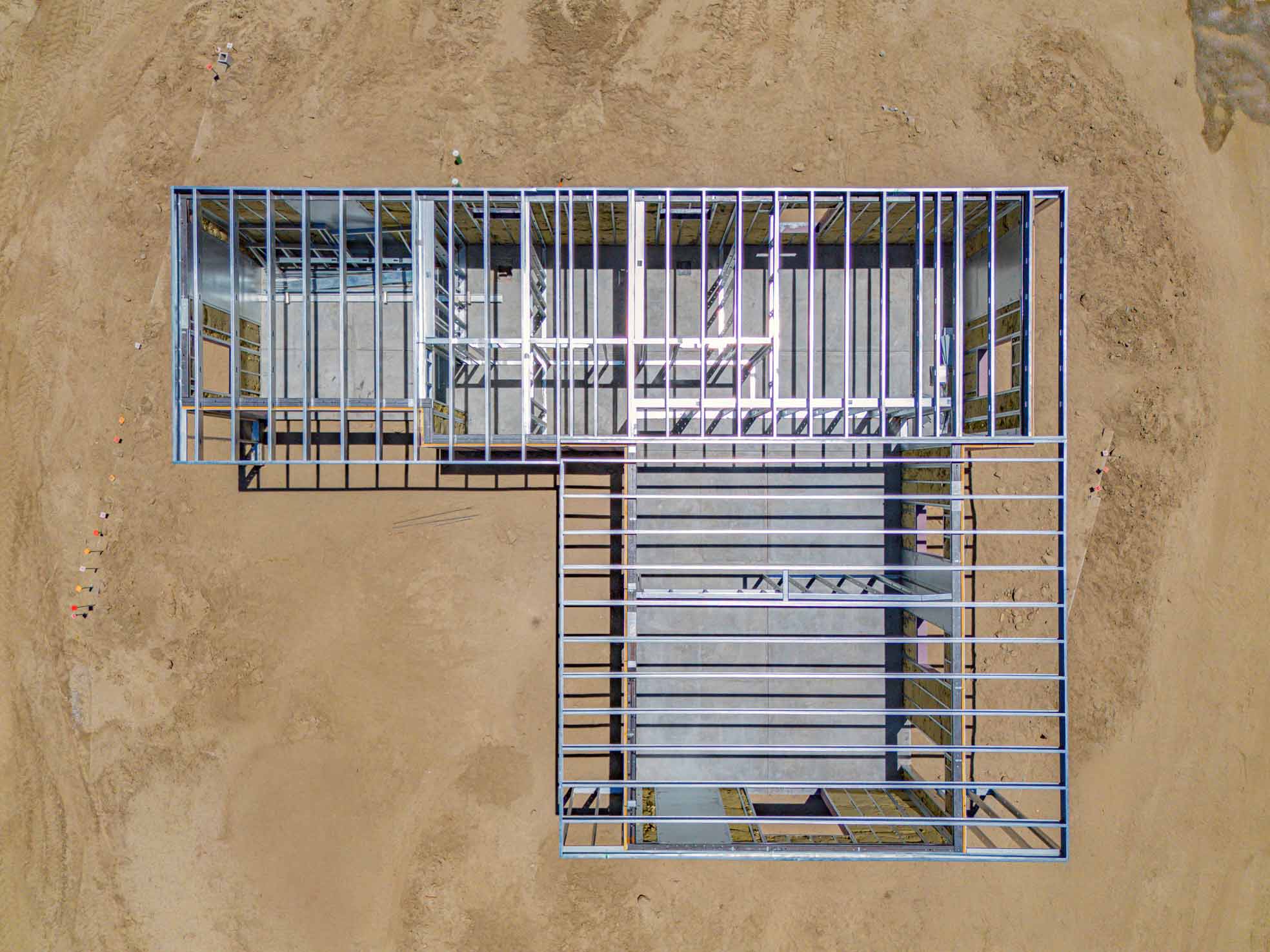
San Diego County spans six distinct climate zones, from mild coastal neighborhoods to inland-suburban communities like Escondido to the desert interior around Borrego Springs, where summer highs pass 100°F. A building envelope that performs on the coast faces very different thermal and fire loads sixty miles inland. Factory manufacturing is what makes consistent performance across that range possible: our first-ever 4C SAFE™ installation was a fire rebuild in Borrego Springs assembled in 115°F desert heat, where every window and door opening held to a 1/16" tolerance and the crew made zero field adjustments. That precision is built into the panel long before it meets triple-digit heat or marine air on site.
Backcountry wildfire exposure
San Diego County knows wildfire. The 2003 Cedar Fire, the largest in county history, burned more than 273,000 acres and destroyed some 2,820 structures across the backcountry, and the 2007 Witch Fire destroyed over 1,200 homes and forced mass evacuations through Ramona, Poway, Rancho Bernardo, and Escondido. For rebuilds and new construction in those wildland-urban-interface communities, 4C SAFE™ offers a steel-framed, fire-resistant panel system rated 1-HR and 2-HR fire-resistive and WUI compliant (ICC-ES ESL-1695, patent pending). Borrego Springs proved it in exactly that setting, a single-family fire rebuild in the county's remote desert interior.
Logistics for remote and hard-to-reach sites
Much of San Diego County's buildable land sits well away from the coast, on backcountry and desert sites where a crane rental or specialty rigging isn't around the corner. Because 4C panels require no heavy equipment to assemble, remote sites like Borrego Springs don't need machinery on standby, panels arrive pre-labeled and are assembled in sequence by the crew on hand. Fewer truck trips and less onsite waste also support the embodied-carbon goals a growing number of San Diego County jurisdictions ask projects to weigh.
How 4C works with the San Diego construction industry
We sell through the industry, not around it, working exclusively through partners: architects, general contractors, developers, and material vendors, rather than direct to homeowners. Both of our completed San Diego County homes were specified by local design and building professionals. For developers and builders working anywhere from the coast to the desert, a manufactured panel system adds capacity and schedule certainty without asking anyone to redesign an approved plan. Compare the two systems on our systems overview, or watch a 4C SAFE™ build come together in our Borrego Springs time-lapse.
Planning a build in a remote or high-heat area of San Diego County, like Borrego Springs or the surrounding desert communities? Ask us about logistics: 4C panels require no heavy equipment to assemble, which matters when a job site is far from the nearest crane rental. Reducing truck trips and material waste also supports the embodied-carbon goals more San Diego County jurisdictions are asking projects to consider.
Building in San Diego County?
Tell us about your site and climate, and we'll help you choose between 4C SAFE™ and 4C ECO™.